Image: Lauri Poldre / Pexels.com
Uli Hoeneß is no stranger to major disputes. Soccer, business, taxes—and now, apparently, trees as well. On August 27, 2026, a neighborhood dispute will be heard before the Munich II Regional Court. At first glance, the reason seems almost unbelievable: two newly planted trees on the property of the FC Bayern honorary president in Bad Wiessee. But behind these two trees lies a very serious legal question. The issue is whether planting was even permitted at this location. The neighbor cites an old agreement that is supposed to keep certain areas of the property free of vegetation. Hoeneß sees things differently. The case illustrates a striking point: when it comes to one’s own property, the owner’s freedom sometimes ends where the neighbor’s long-standing rights begin.
Two small trees suddenly cause a big problem
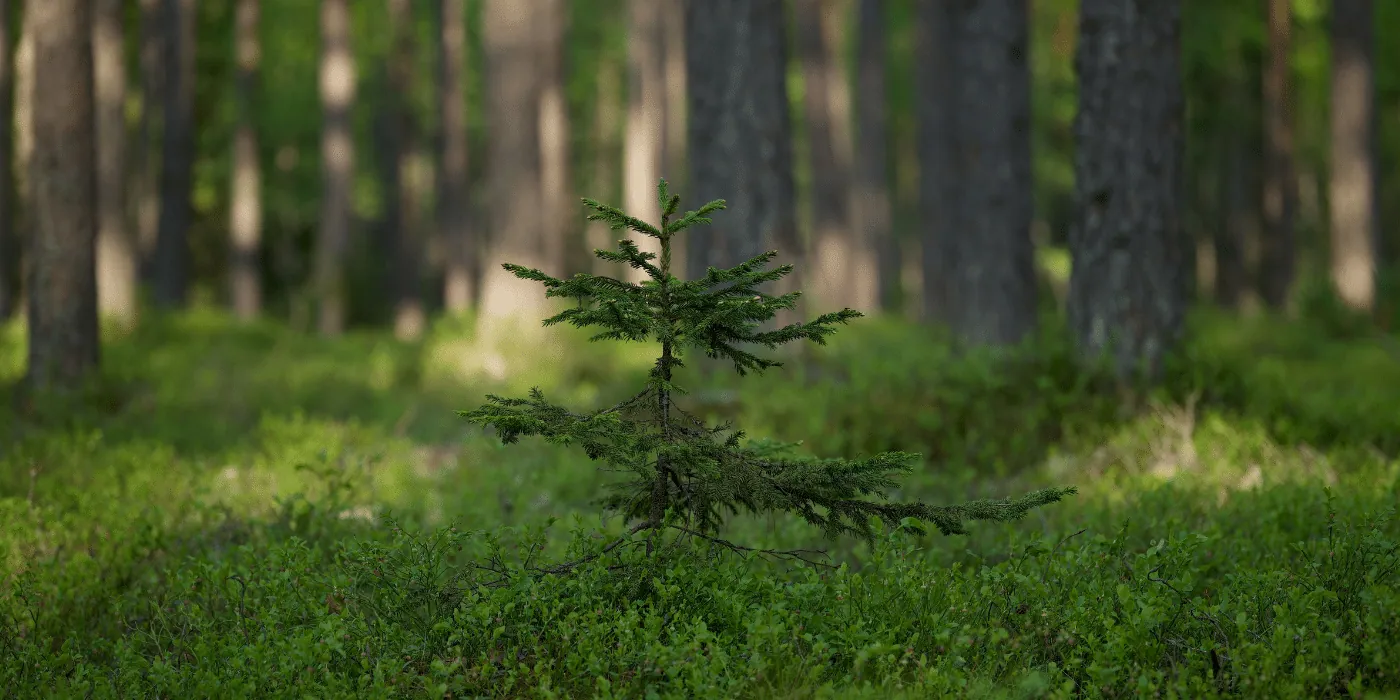
According to reports so far, the two trees were planted in May 2026. They are not located in an open area, but rather within a group of older trees.
According to sources close to Hoeneß, two older trees could no longer be saved due to weather damage. The new trees are intended to replace them.
But for the neighbor, that is precisely the crux of the matter: He believes that the new planting is located in an area that must remain clear under a decades-old agreement.
Hoeneß denies this. In his view, the two trees are located outside the area covered by this regulation.
This means that two very different perspectives are at odds with one another:
One person says, “There shouldn’t be a tree here.”
The other one says, “Yes—this is exactly where he’s supposed to stand.”
And since they apparently couldn't reach an agreement, a court will now decide.
What exactly is this kind of old land use regulation?
The term sounds more complicated than the reality of everyday life.
Put simply, a so-called easement is a permanent right that may exist on one parcel of land for the benefit of another. Such rights are generally recorded in the land registry and may, for example, stipulate that someone is permitted to use a path across a neighboring parcel of land or that certain structures may not be built or certain plants may not be planted there.
The key point is this: Such a right can remain in effect for a very long time—even if the properties eventually change hands.
That is exactly why old agreements can suddenly become highly relevant again decades later.
A piece of land is sold, a new owner moves in, an old agreement falls by the wayside—and at some point, someone plants two trees. Suddenly, the question arises: What exactly was agreed upon many years ago?
In the Hoeneß case, it is said that such an old regulation is the reason why the neighbor is taking action against the two new trees.
“But there are trees everywhere!” – It’s not quite that simple
Uli Hoeneß is said to see things differently. There are already numerous trees on his large property. The two new trees are part of an older group of trees and, according to reports so far, were planted to replace damaged trees.
At first glance, the argument seems reasonable: If there have been trees there for decades, why should two new trees, of all things, suddenly be banned?
Legally speaking, however, that is not automatically decisive.
After all, it depends on what exactly is stated in the old agreement and how it should be interpreted. The exact location of the trees can also be a factor.
A small difference on the property can suddenly make all the difference. Are the trees inside or outside the protected area? How was the boundary of this area described at the time? And what was the agreement actually intended to achieve?
These are questions that can't be answered just by taking a quick look at a garden.
Even without the celebrity factor, trees can end up in court
The Hoeneß case seems sensational because a prominent name is involved. The real problem, however, is anything but unusual.
In Bavaria, there are clear rules regarding how far certain plants must be from the property line. For trees and shrubs, the general rule is as follows: For plants that will eventually grow to a height of more than two meters, a neighbor may generally require a distance of two meters from the property line. For smaller plants, a shorter distance generally applies.
For agricultural properties, even greater distances may be required under certain conditions. In such cases, trees taller than two meters may need to be planted at least four meters from the property line if the economic use of the neighboring property could be significantly impaired by a lack of sunlight.
This means that when you plant a tree, you shouldn't just think about whether it looks nice today.
You should also consider how big it could become in ten or twenty years.
And then there are the really old rules
Things get particularly interesting when it’s not just the legally required distances that come into play, but there’s also an additional agreement between property owners.
In that case, checking the land registry may be more important than considering what normally applies to trees.
That's what sometimes makes neighborhood law so complicated: There isn't just one rule that applies to every tree and every property.
Legal requirements, prior agreements, property boundaries, and specific circumstances may all come into play.
Even the question of how a distance is measured is governed by law. In Bavaria, when measuring a tree, the distance is generally measured from the center of the trunk at the point where it emerges from the ground.
So anyone who thinks their neighbor simply has to “leave two meters of space” should probably measure it carefully first.
An unobstructed view does not automatically constitute a legal right
Another question makes this case particularly interesting: Can a neighbor demand that his view of the landscape remain unobstructed? One must be cautious here.
Just because a tree obstructs the view does not automatically mean that the neighbor has a right to have the tree removed. What matters instead is whether there is a specific legal basis—such as an agreement or another provision that specifically covers this situation.
In the current dispute, therefore, the issue is apparently not simply that someone might lose their view. Rather, the key point of contention is the existing property regulation and the question of whether the two trees violate that regulation. That is an important distinction. Otherwise, every neighbor could soon say, “This tree is blocking my view.”
What Property Owners Can Learn from This Case
The dispute at Lake Tegernsee is a good example of why, before making major changes to your own property, you shouldn't just consider your own property.
“But this is my property” sounds convincing—but legally, it’s not always the final word.
Before building a new garage, installing a fence, planting more extensive landscaping, or making any other permanent changes, it may be a good idea to review the existing documentation.
Old entries in the land registry or agreements between former property owners can be particularly interesting.
After all, a neighbor’s right may predate the current owner—and sometimes even predate most of the people discussing the dispute today.
Two trees are small—but the dispute over them could become huge
The Hoeneß case also highlights a problem that is typical of human nature.
It all starts with two trees. Then comes a conversation. Then perhaps a letter. Then another letter. And at some point, the case files end up in court. Financially and personally, this can quickly become much bigger than the original subject of the dispute. According to reports so far, the parties involved have differing views on whether the trees are allowed to stand in this location. The neighbor has taken the matter to court; on August 27, 2026, the Munich II Regional Court is scheduled to hear the motion for summary judgment. A final assessment of the dispute should therefore not be made until after the court has issued its decision.
Our Take on the Tree Dispute: Sometimes a centimeter is more important than an entire soccer field
This case is particularly interesting because it shows how quickly a minor issue can turn into a major legal dispute.
After all, two trees aren’t a luxury villa, a massive hall, or a construction project. And yet, the question of whether they’re allowed to stand in that exact spot can spark a legal dispute. The real problem probably isn’t the tree. The problem is that property owners far too often believe their land belongs to them without any caveats. But that isn’t always the case.
Anyone who buys a piece of property may also assume old rights and obligations. And anyone who lives next to another property cannot simply prevent every change they don't like.
So here’s our advice to both sides: Before a major legal battle breaks out over two trees, you should first review the land registry, old agreements, and the property map.
Maybe it will actually say in black and white that the trees have to go.
But maybe it also says that they're allowed to stay.
And if neither of these points is clear, one should ask oneself whether years of neighborhood strife should really be the price to pay for two trees.
Avoid legal disputes with your neighbor over trees. Get legal advice and clarify your rights now!
to the lawyerAt a fixed price of 169 EURO (gross)