Billions are at stake, along with contracts from a historic state of emergency and a question that is still occupying the federal government years after the coronavirus pandemic: Does the state have to pay companies for masks that it ultimately did not accept, or did not accept as agreed?
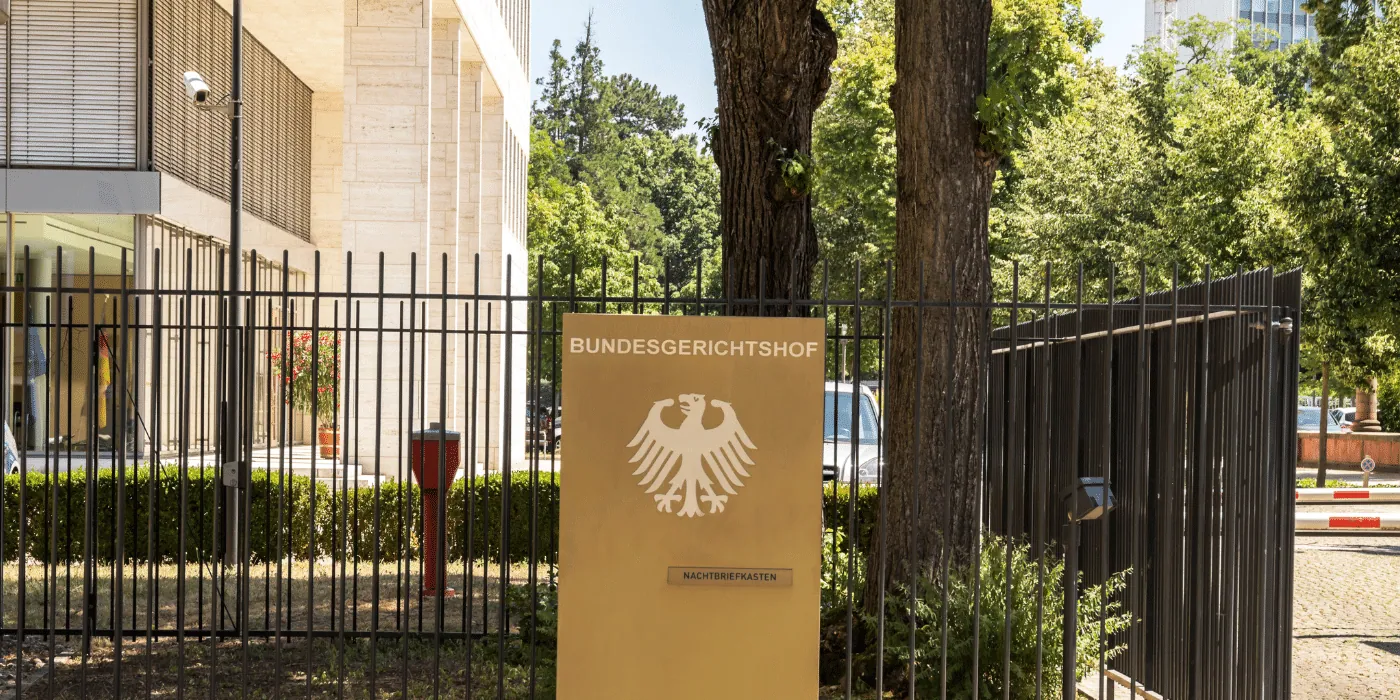
On December 15, 2026, the Federal Court of Justice (Bundesgerichtshof, BGH) intends to hand down decisions in several proceedings concerning the federal government's large-scale mask purchases. The rulings could matter far beyond the specific cases heard, because numerous other disputes hinge on similar questions.
A lot of money is therefore at stake for the federal government. At the same time, the hearing in Karlsruhe suggested that the trend so far, which has been unfavorable for the state, is by no means set in stone.
When Germany suddenly needed billions of masks
To understand today's disputes, you have to go back to March 2020.
The coronavirus pandemic had reached Germany, protective masks were scarce, and hospitals, doctors' offices and other medical facilities in particular urgently needed supplies. In this situation, the Federal Ministry of Health, then headed by Jens Spahn (CDU), opted for an unusually open procurement model.
Companies could offer masks on predetermined terms. Anyone who accepted the conditions could, in principle, conclude a contract with the federal government. The price set was 4.50 euros apiece for FFP2 masks and 60 cents for surgical masks.
According to the terms as described, there was no fixed cap on the total quantity. The goal at the time was obvious: very large quantities were to become available as quickly as possible.
In total, the federal government spent around 5.9 billion euros on mask procurement.
What was supposed to work quickly in the acute crisis, however, subsequently turned into a massive complex of disputes.
Millions of masks were not accepted
The federal government did not accept some of the masks offered or delivered. Among the reasons were late deliveries and alleged quality defects.
For the companies affected, enormous sums were sometimes involved. They had geared up for the government orders and then demanded the agreed payment. Numerous cases ended up in court.
In total, claims of more than two billion euros are on the table. Now a few selected cases are before the Federal Court of Justice. They are intended to clarify important fundamental questions that may also be relevant to other proceedings.
In three of the cases heard by the BGH, companies are demanding additional money. In another case, the federal government is seeking to recover amounts it may have overpaid.
Cologne sided with the suppliers, but the BGH is asking questions
Things initially went badly for the federal government before the Cologne Higher Regional Court (Oberlandesgericht Köln). There, the suppliers largely prevailed in the four cases now before the BGH.
A crucial point was the question of how important the agreed delivery dates actually were.
According to the Cologne court's assessment so far, the federal government was not entitled to simply withdraw from the contracts without first giving the companies an opportunity to fulfill their obligations. Exact compliance with the originally stated delivery date was not considered decisive.
It is precisely on this point that the Federal Court of Justice has now expressed doubts.
Presiding Judge Ralph Bünger said during the hearing: "Timely and defect-free delivery could have been essential."
Behind this lies an understandable idea: in the spring of 2020, the masks were not bought for a long-term stockpile under normal market conditions. They were supposed to reach medical facilities as quickly as possible. If the specific time of delivery was crucial to this system, a late delivery might have to be assessed differently than in an ordinary purchase.
However, this is not yet a final determination. Bünger expressly emphasized that the court's assessment was still "in flux."
Were the masks defective at all?
Even a decision on the significance of the delivery dates will not automatically end the entire mask dispute.
Another central question concerns the quality of the goods. The federal government had complained about defects in some of the masks. However, whether these complaints were actually justified has not been conclusively examined in every decisive respect in the decisions so far.
That may still have to be done.
This makes the matter more complicated: even if the BGH lays down basic rules for dealing with late deliveries, extensive examinations may still be necessary in individual proceedings. These would concern, for example, which masks were actually delivered, whether they met the agreed requirements and what consequences any deviations found would have.
Added to this is another important question: What happens if a company wanted to deliver but did not receive a necessary appointment or delivery slot from the state? The federal government's responsibility for possible delays may therefore also play a role.
A billion-euro risk, but no simple all-or-nothing decision
December 15 is therefore likely to be an important date, but hardly one that will draw a line under all mask proceedings.
The decisions of the Federal Court of Justice may set the standards by which numerous disputes will be judged in the future. Individual cases could nevertheless have to be examined more closely again afterward.
That is exactly why caution is called for with these enormous sums. More than two billion euros in disputed claims does not automatically mean that the federal government will actually have to pay that amount. Nor do the doubts voiced in Karlsruhe automatically mean that the companies will end up empty-handed.
What will be decisive is which rules the BGH lays down in December and how these are then applied to the individual deliveries.
Recht 24/7: The real bill for decisions made in crisis mode comes years later
The mask purchases show quite vividly what happens when political speed meets contracts worth billions. In the spring of 2020, action had to be taken quickly. That can hardly be seriously disputed. But extraordinary time pressure does not make clear conditions less important; it makes them more important.
Anyone who wants to buy practically unlimited quantities at fixed prices creates enormous economic expectations. Conversely, a supplier receiving an order meant to deal with an acute emergency can hardly take it for granted that the time of delivery is irrelevant.
That is why it would be too simple to tell the mask dispute merely as a story about wasteful government procurement or about companies demanding billions after the fact. The more interesting question is: Were the rules of the game formulated so clearly at the time that both sides could actually know what they were getting into?
Therein lies the uncomfortable lesson of the story. A crisis can explain hectic decisions. But it cannot prevent someone from putting the bill on the table years later.
On December 15, the BGH may make clear who has to bear at least part of this bill. The political question of how a state can buy quickly, flexibly and with financial control all at once in the next crisis, however, is still far from answered.
Contact our experts for a legal assessment in a comparable dispute. Get a well-founded initial consultation and clarify your claims!
to the lawyerAt a fixed price of 169 EURO (gross)